





Karsha
Next generation financial cyberinfrastructure tools
About Karsha
“Karsha” is a word derived from Sanskrit which means cash.The Karsha project aims to develop next generation financial cyberinfrastructure tools to support data science for finance. At the movement Karsha is a project that has been on going in Lsf since 2011 September. In the financial data analysis context Karsha facilitates financial researchers to analyse different kind of complex financial data. This project is supported by the Smith School of Business at the University of Maryland, the Lanka Software Foundation and the US National Science Foundation.
Karsha - Annotate
A web tool for annotate financial documents using terms from the Financial Industry Business Ontology (FIBO).

Karsha Visualizer is an open source web based tool that carries out the research and development effort to analyze paths and cycles in the GC network, and provides visual analytics capabilities.
Karsha - Drawdowns
The Karsha Drawdown tools and website provides visual analytics of the impact of price Drawdowns (lowest value in the price of individual equities within some interval) on the aggregate behavior of the S&P 500 portfolio of equities.
Funding
Karsha has being funded by University of Maryland and lately by wso2.
Sahana - Disaster Management Systems
About Sahana
Sahana Agasti is a Free and Open Source Disaster Management system that was developed in the wake of the Asian Tsunami of December 2004. It is a web based collaboration tool that addresses the common coordination problems during a disaster including locating missing people, managing aid, managing volunteers, and tracking camps effectively between Government groups, the civil society (NGOs) and the victims themselves. Sahana was first developed by the Lanka Software Foundation in collaboration with the global disaster management community and was later handed over to the Sahana Software Foundation (SSF). The SSF went on to create Sahana EDEN, a Python-based version of the original Sahana PHP project. Sahana EDEN has become the most popular open source information management for disaster management and humanitarian aid agencies.
Mission & Vision
The Mission of the Sahana Software Foundation is to help alleviate human suffering by giving emergency managers, disaster response professionals and communities access to the information that they require to be better prepared for and respond more quickly to disasters through the development and promotion of free and open source software and open standards.
Sahana Software serves the needs and requirements of a diverse group of stakeholders:
- Government agencies and jurisdictions at the national, provincial or state, and local levels
- UN Agencies, international and local charitable organizations (NGOs)
- Communities & disaster victims
- Technology companies & software developers
The vision of Sahana is to build and sustain a global open and collaborative community of contributors to information and communications technologies for disaster management, in order to:
- Support the needs of Sahana users through promoting and developing innovative open source solutions for disaster information management.
- Support the adoption of open standards for data exchange between information systems to manage disaster data.
Major Sahana Deployments
Sahana Agasti
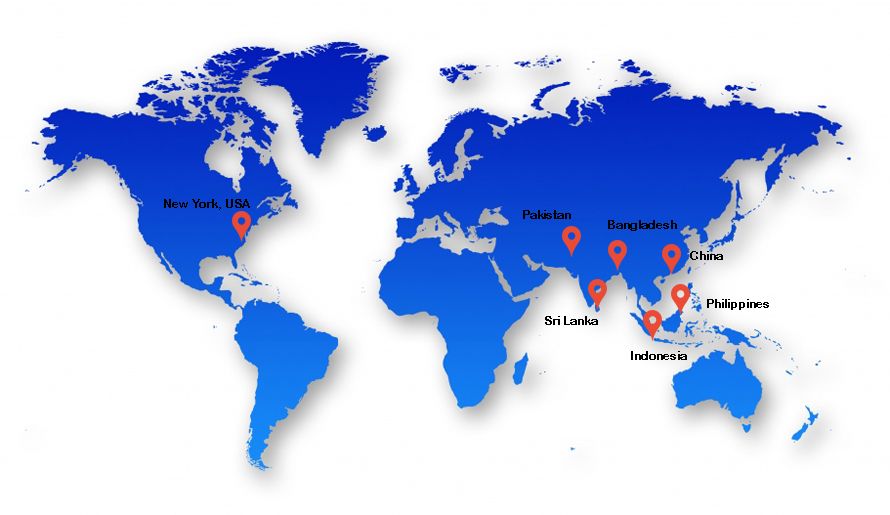
- Tsunami in Sri Lanka 2005
- Asian Earthquake in Pakistan 2005
- Landslide disaster in Philippines, 2005
- Yogjakarta Earthquake, Indonesia 2006
- Office of Emergency Management at New York City Council, U.S.A 2007
- Disaster Management Bureau for Cyclone Sidr at Bangladesh 2007
- Chengdu Earthquake at China, 2008
- Pre-deployment for Management system at Sarvodaya, Sri Lanka 2008
Sahana EDEN
- DRR Project Portal for Asia Disaster Preparedness Center 2010
- Sahana Community Resilience Mapping Tool for Los Angeles County Department of Public Health 2011
- Hurricane Sandy in New York City for Occupy Sandy 2012
- Timor-Leste: Disaster Risk Management Portal for National Disaster Management Directorate 2013
- Nepal Climate Change Portal for Department of Meteorology & Hydrology 2014
- Refugees Welcome in partnership with Humanitarian Open Street Map 2015
- Sahana Alerting and Messaging Broker for Myanmar 2016
- Support To Life (STL) for Syrian Refugees 2017
The Socio – Economic Benefit of Sahana
1. LSF awarded over 30 fellowships under this project. Sahana is now the defacto disaster management system in the world.
2. Sahana Software Foundation is now the defacto disaster management system in the world.
3. Numerous commercial companies have spun off from this project, including Respere, AidIQ and SpotOn Solutions. These companies provides employment for over 20 graduates.
Ninithi
Modelling and Simulation Software for Nano technology
About Ninithi
Ninithi is a free and opensource software developed to visualize and analyze the carbon allotropes used in nanotechnology.Ninithi can be used to visualize Carbon nanotubes, Graphene/ nanoribbons and Fullerene and to plot the band structures of Graphene and Carbon nanotubes. The software is licensed under the GNU Public Licence version 3.
The objective is to develop an open source modelling and simulation software that helps nano scientists, students and lecturers with their research.
Ninithi infrastructure enables scientists to:
- Visualize and analyze nano-structures
- Reduce research and development time
- Compute band structure plots
- Store the models as image files
A few application domains of Ninithi are:
- Automobiles
- Consumer Electronics
- Sensor Design

Ninithi software vs. competitive industry software
| LSF / Ninithi | Nanotube modeler | Carbon Nanobands |
|
| Cost | Free and Open Source (standalone) | Proprietary software (50$ per user, standalone) | Web application, 2D graphic User interface (Application Free –source code not available) |
| Functionalities | 3D-Visualization of SW & MW nanotubes, Graphene and Fullerene | 3D Visualization of SW & MW nanotubes, Graphene and Fullerene | 3D Visualization of SW nanotubes (Quality is lower and slow processing as a web application ) |
| Program Language | Done in java – Platform independent (Windows & Linux) | Undisclosed (only for Windows) | Done in MATLAB |
| Electrical Properties | Can be analyzed | Not available | Can be analyzed |
| Nanohub ranking (suite of tools maintained by Purdue University) | 7.1 out of 10 | Not available | 6.2 out of 10 |
Download
Pre requiste
Java 1.6.0 or later should be installed to your machine. Download
Java from http://www.java.com/en/download/index.jsp
Get Involved
User Mailing List
To subscribe: https://lists.sourceforge.net/lists/listinfo/ninithi-users
Address: ninithi-users@lists.sourceforge.net
Developer Mailing List
To subscribe: https://lists.sourceforge.net/lists/listinfo/ninithi-devel
Address: ninithi-devel@lists.sourceforge.net
The Team
|
Chanaka Rupasinghe Teaching Associates and Phd student at Monash University. |
Mufthas Rasikim Completed BSc Engineering (Electronics)degree in 2009 from University of Moratuwa |
Future of Ninithi – Nano Studio
With the success of Ninithi modelling software, we initiated the second phase of Ninithi- Nano Studio, which built a plugin based software framework for Nano systems design and simulations. This software enables scientists to design and test nano systems in a virtual environment before implementing them in the real world. Since only optimum designs can be tested in the real world, this would lead to major savings.
Toolboxes in Ninithi Nano Studio can be used to design conceptual systems with a bottom-up approach. The user may select the appropriate materials and geometric parameters for the design. For an example, Carbon Nanotube Field Transistor could be part of the design tool box where the design tool provides an abstract description of transistor design and users can change the materials used for transistor design and simulate the outcome. For instance, user may select silicon dioxide as the substrate and a zigzag nanotube as the drain in nanotube transistor design toolbox, and then simulate the resulting transistor.
In addition to saving time and money, it is also good for the environment. Since the material usage and energy consumption become low, impact on the environment will also be reduced.
Funding
Ninithi was initially funded by Lanka Software Foundation and subsequently we received funding from the National Science Foundation, Sri Lanka.
eScience
Open Grid Computing Environment Toolkit
Background
Open Grid Computing Environment (OGCE) E-Science toolkit provides a platform for scientists to compose, execute, monitor and share their experiments as scientific work flows. E-Science projects are often conducted to solve problems in domains such as particle physics, bio-informatics, earth sciences, etc. Such projects tend to be costly and long term. Moreover, parties (resource providers, scientists, users etc.) involved in these types of projects belong to different organizations such as governments, universities and private firms and are usually dispersed over the globe. Experiments conducted often require interacting with numerous other systems to perform tasks such as user authentication, data extraction, conversion and validation in additional to experiment-related computations. Therefore, coordination between these parties during experiments require a significant amount of effort, time and computing knowledge.
However, most of the scientists and users from various disciplines who participate in E-science projects do not have (nor do they need) sufficient computing knowledge or the time to set up and manage the infrastructure required to conduct their experiments. This affects not only the individual scientists (and other stake holders) but also hampers achieving the ultimate goals of the project as well. E-Science toolkit project aims to minimize these barriers by not only automating scientific workflows but also providing supplementary services such as registry services and middleware support.

E-Science Toolkit
E-Science toolkit helps scientists to focus on solving the problem at hand without being too concerned about technical details related to managing the infrastructure. E-Science toolkit is comprised of three main components namely: –
- WS-Messenger
- Workflow tracking library
- Graphical scientific work flow composer
WS-Messenger is a web services based, publish-subscribe middleware which caters for messaging requirements of other components in the E-science toolkit. It implements two specifications namely WS-Notifications and WS-Eventing which are meant to standardize such systems. WS-Messenger is released as a standalone distribution, further improving its usability outside of E-Science domain.
Usually scientific experiments are evolving processes, which mean scientists will design their workflows based on initial objectives, and modify/refine them based on the new objectives, previous results etc, until desired results are obtained. During this process scientists need to observe not only initial parameters/data supplied and final results, but also intermediate results as well. Additionally scientists may require reproducing results or validating the steps involved in an experiment later on. To cater to this requirement E-Science tool kit provides a library to monitor workflows as they are executed. This workflow tracking library facilitates its users to view various events generated during a workflow execution such as invocations of each step, partial results generated, errors encountered etc.
The most important component provided by the E-Science tool kit is Xbaya ndash, This is an user friendly program which enables scientists to develop, execute and monitor scientific workflows with the aid of a GUI. The real power of the Xbaya is, that it simplifies the workflow creation into a set of drag and drop operations, enabling users to combine various scientific applications and research into a meaningful experiment with minimal effort. Moreover, Xbaya hides technical complexities involved in invoking these scientific applications and gathering results, thus making life easier for its users.
Funding
It is worth noting that the project is an collaborative project, and the initial software was developed at Indiana University. However, Lanka Software Foundation has also made significant contributions to the project, and we believe that efforts like this would help Sri Lanka in building recognition in the research arena.
Important Milestones
- Project was initially developed by Indiana University (and other collaborating universities) as part of a large E-Science project named “Linked Environments for Atmospheric Discovery (LEAD)” which processes U.S wide weather data.
- In August, 2009 Lanka Software Foundation (LSF) partnered with Indiana University with the vision of making this set of tools more accessible and domain independent, hence making it usable in future E-Science projects word wide.
- The contributions LSF made to the messaging subsystem of E-Science toolkit were presented at the IEEE International Conference on Web Services (ICWS) in July 2010, which is considered to be a significant milestone for the project.
- The project has successfully released two major versions for the software, with version 1.1 being the latest.
Apache AXIS 2 and AXIS C++
About Apache AXIS 2
SOAP is an industry-standard XML-based communication Protocol for communicating between applications. The Apache Axis Java project developed the most widely recognized and used, open source Java SOAP implementation. A new architecture for Axis2 was introduced during the August 2004 Summit in Colombo, Sri Lanka. The new architecture on which Axis2 is based on, is more flexible, efficient and configurable in comparison to Axis1.x architecture. Some well established concepts from Axis 1.x, like handlers etc., have been preserved in the new architecture.
Apache Axis2 not only supports SOAP 1.1 and SOAP 1.2, but it has also integrated support for the widely popular REST style of Web services. The same business logic implementation can offer both a WS-* style interface as well as a REST/POX style interface simultaneously.
Apache Axis2 is more efficient, more modular and more XML-oriented than the older version. It is carefully designed to support the easy addition of plug-in “modules” that extend their functionality for features such as security and reliability.
Axis2 comes with many new features, enhancements and industry specification implementations. The key features offered are as follows:
- Speed – Axis2 uses its own object model and StAX (Streaming API for XML)parsing to achieve significantly greater speed than earlier versions of Apache Axis.
- Axis2 was designed ground-up keeping low memory foot print in mind.
- AXIOM – Axis2 comes with its own light-weight object model, AXIOM, for message processing which is extensible, high performing and is developer friendly.
- Hot Deployment – Axis2 is equipped with the capability of deploying Web services and handlers while the system is up and running. In other words, new services can be added to the system without having to shut down the server. Simply drop the required Web service archive into the services directory in the repository, and the deployment model will automatically deploy the service and make it available for use.
- Asynchronous Web services – Axis2 now supports asynchronous Web services and asynchronous Web services invocation using non-blocking clients and transports.
- MEP Support – Axis2 now comes handy with the flexibility to support Message Exchange Patterns (MEPs) with in-built support for basic MEPs defined in WSDL 2.0.
- Flexibility – The Axis2 architecture gives the developer complete freedom to insert extensions into the engine for custom header processing and system management
- Stability – Axis2 defines a set of published interfaces which change relatively slowly compared to the rest of Axis.
- Component-oriented Deployment – You can easily define reusable networks of Handlers to implement common patterns of processing for your applications, or to distribute to partners.
- Transport Framework – We have a clean and simple abstraction for integrating and using Transports (i.e., senders and listeners for SOAP over various protocols such as SMTP, FTP, message-oriented middleware, etc), and the core of the engine is completely transport-independent.
- WSDL support – Axis2 supports the Web Service Description Language,version 1.1 and 2.0, which allows you to easily build stubs to access remote services, and also to automatically export machine-readable descriptions of your deployed services from Axis2.
- Add-ons – Several Web services specifications have been incorporated including WSS4J for security (Apache Rampart), Sandesha for reliable messaging, Kandula which is an encapsulation of WS-Coordination, WS-AtomicTransaction and WS-BusinessActivity.
- Composition and Extensibility – Modules and phases improve support for composability and extensibility. Modules support composability and can also support new WS-* specifications in a simple and clean manner. They are however not hot deployable as they change the overall behavior of the system.
List of Apache Committers
- Sanjiva Weerawarana
- Srinath Perera
- Saminda Abeyruwan
- Ajith Ranabahu
- Eran Chinthaka
- Jaliya Ekanayake
- Ruchith Fernando
- Chathura Herath
- Deepal Jayasinghe
Axis C++ Development Project
SOAP is an industry-standard XML-based communication Protocol for communicating between applications. LSF in its pioneering project, initiated an effort to develop a C++ SOAP implementation for Apache. Axis C/C++ (Axis CPP) is a non-Java implementation of Axis. At its core Axis CPP has a C++ runtime engine. The tooling provided allows you to create C++ client-side stubs and server-side skeletons. The server skeletons can be deployed to either a full Apache web server using the supplied apache module or a “simple_axis_server” – which is a simple HTTP listener (designed to help you test your services).
Features
- SOAP engine with both client and server support
- WSDD based deployment with dynamic deployment tools.
- Support for all basic types, complex types and Arrays
- WSDL2WS tool for building C/C++ components
- Server side – Skeletons and Wrappers
- Client side – Stubs
- Standalone server (with HTTP support)
- Standalone server (with HTTP support)
- Web interface to the deployed services and their WSDL s.
- Sample web services and client applications.
Dalesa
Peer-to-Peer Web Cache
About Dalesa
Dalesa is a Free and Open Source Peer - to - Peer web caching software licensed under GPL - 2 that will improve web performance in your local area network. Dalesa brings cooperative web caching based on peer - to - peer computing to your desktop. Nodes participating in the network will expose their web caches to the entire system through peer - to - peer web object (document) lookup algorithms. This project focuses on using various group communication technologies such as distributed hash tables and IP multicasting to implement robust document lookup techniques. The system provides a proxy interface and an API for browsers and other potential user agents. User agents such as web browsers can embed the peer - to - peer lookup algorithm by using the API. However, when changes to the code of the user agent is not allowed or inconvenient the http proxy can be used.
Functionalities
Installing Dalesa is easy and only consists of a few steps and its functionality can be summarized in several steps.
- Dalesa is installed in user’s computer.
- Dalesa communicates with user’s web browser and other computers installed with Dalesa
- When a user requests for file, Dalesa will search it on other computers installed with Dalesa.
- If the requested file is available in another computer file will be downloaded from there, otherwise it will be taken from the web.
- Steps 3 and 4 only take 5 milliseconds maximum.
Advantages of Dalesa
- Dalesa was designed with small Local Area Networks in mind and can be easily used in a network with a 10Mbps bandwidth facilitating 40 computers. The software can be scaled up for much larger networks with hundreds of nodes with few optimizations. These optimizations were tested using NS2(Network Simulator). Also it is even possible to improve it for Internet scale networks using Distributed Hash Tables (DHT).
- The user interface is user friendly and graphical, and can be used for configuring Dalesa
- Displaying real – time performance of Dalesa cache such as a ratio between number of cache hits and total number of cached files.
Dalesa User Interface

- Menu bar with File, Edit and Help menus
- Search tab opens the search pane shown in the Figure.
- Real time web traffic graphs
- Ratio between cumulative of all objects cached and objects that has at least one hit (statistics by number of files)
- Ratio between cumulative size of all objects cached and objects that has at least one hit (statistics by size of files)
- Colon separated IP and Port number that Dalesa proxy listens on
Download
Dalesa 1.2.0 is available for both Linux and Windows as source packages and Ubuntu binary packages. Dalesa 1.2.0 brings P2P web caching to windows platforms including XP, Vista and Seven. All three windows versions can use the same installer file given below.
Get Involved
User Mailing List
To subscribe: https://lists.sourceforge.net/lists/listinfo/dalesa-users
Address: dalesa-users@lists.sourceforge.net
Developer Mailing List
To subscribe: https://lists.sourceforge.net/lists/listinfo/dalesa-devel
Address: dalesa-devel@lists.sourceforge.net
The Team
 Wathsala Vithanage Completed BSc in Information Technology in 2007 from University of Colombo - School of Computing |
 Nishanka Sirisena Completed BSc in Computer Science in 2005 from University of Colombo - School of Computing |
 Nuwan R Gunaratne Completed BSc in Computer Science in 2002 from University of Colombo |
Future of Dalesa
The future of Dalesa lies in its deployments and was designed to be used by schools, Nenasalas (local internet browsing centers) and small government organizations. We hope to create a lasting impact in the rural communities by allowing them easy access to internet through the peer-to-peer web cache.
Funding
Phase I of Dalesa was funded under the e-society grant from Information Communication Technology Agency (ICTA) Sri Lanka.
Sri Lanka Innovation Dashboard
For Science, Technology and Innovation
About Innovation Dashboard
The Sri Lanka Innovation Dashboard provides information about the current national status regarding Science, Technology and Innovation. The Dashboard has two primary objectives.One is to ensure the delivery of stable, reliable and accessible collections of institutional and people data in electronic form for shared access by the community. The other is to support the national ST & I strategy by providing national ST & I information that can be an integral part of decision making, competitive positioning and focus on value added areas.
User Interface of Innovation Dashboard

Features of Innovation Dashboard
The Dashboard is rich in graphical presentation with users given the freedom to choose their preferred mode of presentation. It is also well equipped with drill down features enabling users to drill down to whatever level of detail they desire.
The Dashboard includes three separate dashboards
| General Dashboard | Academic Dashboard | Administrative Dashboard |
| Gives general information about the number of researchers and innovators, the number of publications and collaborations with foreign organisations | Describes the distribution of the number of researchers and innovators over organisations, publications and its growth over the years | Gives information about the number of researchers and innovators over organisations, physical dsitribution of organisations in Sri Lanka, organisational collaborations and global innovation rankings. |
Funding
The dashboard was funded and developed for the Coordinating Secretariat for Science, Technology and Innovation (COSTI). However its generic nature will enable it to be adapted for use by any country.