About
The founding
The Lanka Software Foundation was conceived by Sanjiva and Jivaka in 2001/2. After 16 years in the US, Sanjiva returned to Sri Lanka in 2001. As a long time open source contributor, Sanjiva understood that open source distribution of software was a powerful way to reach the global market. At that time, while everyone was talking about using free and open source software in Sri Lanka, no one was promoting, guiding and supporting the creation of open source software from our side of the world.
In the early 2000s, Sanjiva was deeply involved in creating the Web services platform (the “WS-*” platform) as part of his work in IBM Research. The Web services platform was about converting the Web and its core standards (HTTP, XML (now JSON), HTML etc.) from an information dissemination system to a distributed computing system. It was also the time that free and open source software was becoming the de facto enabler and accelerator of modern infrastructure, starting with the Linux Operating System, the Apache Web Server, the MySQL Database, the PHP Language (the “LAMP” stack) and many others.
Yet, at the time, contributions to almost every open source project was only by people based in the US and a few western nations. They saw this as an opportunity to create a brand for Sri Lanka’s software developers not as a low-cost destination, but rather as a place where smart, creative, hardworking engineers create the software that powers the world.
LSF set out to create an environment to make it possible for Sri Lankan developers to contribute to, and lead, the next generation of platform infrastructure software.
Members
LSF is registered as a company limited by guarantee in 2003, which is the vehicle for creating not-for-profit busineses in the country. The members serve as the guarantors of the company in terms of financial operation and commitment to purpose.
The members are / were:
|
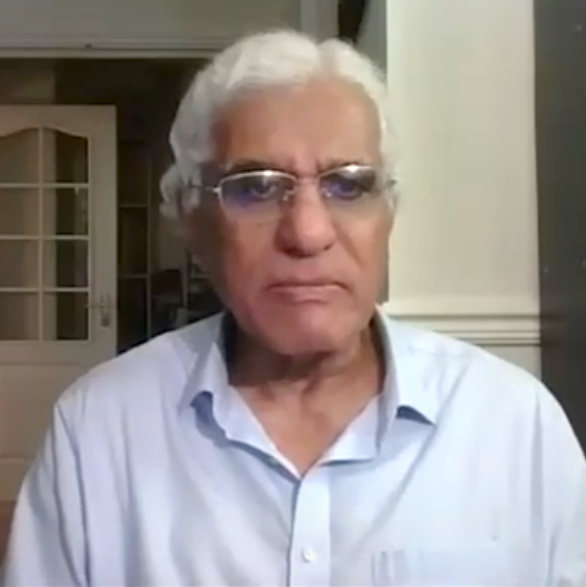
Dr. Indrajith Coomaraswamy Indrajit Coomaraswamy is a Sri Lankan economist who served as the 14th Governor of the Central Bank of Sri Lanka from 2016 to 2019. He has an extensive background in economics and public service, including a long career at the Central Bank of Sri Lanka and the Commonwealth Secretariat. In addition to his professional achievements, he is also a former sportsman who captained the Sri Lankan national rugby team and played first-class cricket. More: https://en.wikipedia.org/wiki/Indrajit_Coomaraswamy |

|
Dr. Kamal Weeraperuma Kamal Weerapperuma is a highly accomplished professional with a background in engineering and a wide range of senior leadership roles. After completing his B.Sc. in Sri Lanka and M.Sc. and Ph.D. in the UK, he served as CEO and Director for major companies like Kelani Cables and Haycarb. |
|
Ralph de Lanerole Ralph de Lanerolle is a highly experienced professional with over 50 years of work in both the public and private sectors, specializing in project finance and management. A Chartered Engineer, he holds degrees from the University of Ceylon and the University of Waterloo, Canada, and is a fellow of the Economic Development Institute of the World Bank. He currently serves on the Board of Directors for ORC PLC and its group companies, having also held senior management and consultancy roles across various industries throughout his career. |

|
Prof. Saman Amarasinghe Saman Amarasinghe is a renowned computer scientist and entrepreneur at MIT, specializing in programming languages and compilers that enhance application performance. He leads the Commit compiler group, which has developed multiple high-performance domain-specific languages like Halide and TACO, and he pioneered the use of machine learning for compiler optimizations. As a successful entrepreneur, he co-founded Lanka Internet Services, the first internet service provider in Sri Lanka, and Determina, Inc., ased on his computer security research. More: https://www.linkedin.com/in/saman/ |
|
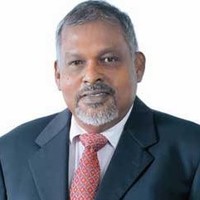
Mr. Paul Ratnayeke Paul Ratnayeke is a prominent Sri Lankan Attorney-at-Law and Solicitor who founded the legal firm Paul Ratnayeke Associates in 1987. He is a respected figure in corporate and commercial law, with extensive experience as a director and chairman on the boards of several public and private companies. As the senior partner of his firm, he leads a practice that specializes in various fields, including litigation, finance, and intellectual property. More: https://www.linkedin.com/in/paul-ratnayeke-36616295 |
|
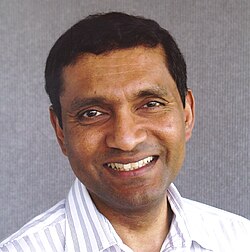
Prof. Kumar Wickramasinghe Kumar Wickramasinghe is a distinguished electrical engineer and computer scientist, renowned for his contributions to scanning probe microscopy, nanotechnology, and nanobiotechnology. He currently holds a prestigious chair at the University of California, Irvine, and was elected as a Fellow of the Royal Society in 2019. He is particularly recognized for his work on scanning thermal microscopy. More: https://en.wikipedia.org/wiki/Kumar_Wickramasinghe |
|
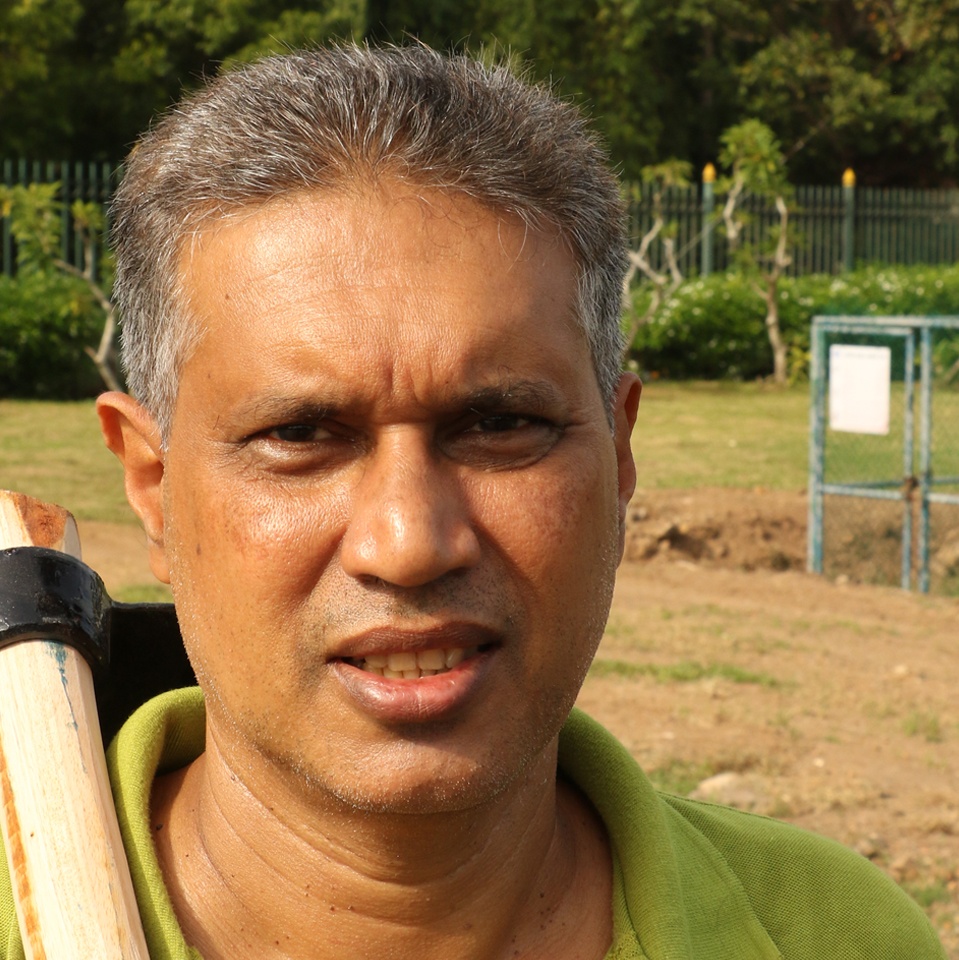
Dr. Yohan Weerasuriya Yohan Weerasuriya is the founder and owner of Back of Beyond Sri Lanka, an eco-tourism operation he launched in 2007 after leaving the corporate world. With a Ph.D. in Agronomy, he pursued his dream to create a sustainable business that contributes to environmental conservation and community empowerment. A lifelong nature enthusiast, he is dedicated to preserving Sri Lanka’s wilderness for future generations and has become a private investor and example for others in the field. More: https://www.linkedin.com/in/yohan-weerasuriya-23b80813/ |
|
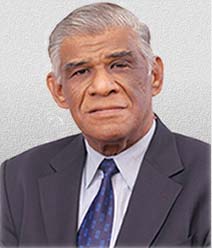
(Late) Prof. V.K. Samaranayake V.K. Samaranayake was a distinguished Sri Lankan computer scientist and academic known for his pioneering contributions to the field of computer science in Sri Lanka. He has played a significant role in the development of computer science education and research in the country. Prof. Samaranayake has held various academic and administrative positions, contributing to the growth of the technology sector in Sri Lanka. More: https://en.wikipedia.org/wiki/V._K._Samaranayake |

|
Jivaka Weeratunge Jivaka is a seasoned financial specialist who was CEO of many companies in Sri Lanka, has been on the boards of many more and is always looking to think out of the box from first principles to create new things. Jivaka and Sanjiva met when Jivaka was leading an effort to build a stock market trading system in mid 90s when he hired Sanjiva (who was then a PhD student at Purdue) to train the team on Java. Jivaka and Sanjiva conceieved of the Lanka Software Foundation as a way to create a brand for Sri Lankan software developers in the open source world. |

|
Dr. Sanjiva Weerawarana Sanjiva is the co-founder of LSF, WSO2, the Lanka Data Foundation and the Avinya Foundation. He is also a Member of the Apache Software Foundation, was a Board Member of the Open Source Initiative and is a Fellow of the National Academy of Sciences of Sri Lanka. More: https://www.linkedin.com/in/sanjivaweerawarana/ |
The Articles of Association of LSF are here.
Phase 1 (2003 to 2013): Building open source technology around web services & Sahana
This phase is what led to the creation of WSO2 on top of the Apache Axis2 project which LSF developed with a $100K grant from the Swedish International Development Agency (from 2004 to 2005). After WSO2 launched in 2005, LSF continued to do various projects in web services but work in that area slowed down a lot as Sahana took primary focus.
In 2004, after the tsunami we also started the Sahana disaster management platform project which became our focus for many years, eventually culminating in it being donated to a dedicated foundation (the Sahana Software Foundation [1]) in 2009.
Projects done in this phase include Apache Axis C++, Apache Axis2, Sahana and Dalesa.
Phase 2 (2013 to 2018): Open source incubator - building open source businesses
In this phase we attempted to support open source projects in Sri Lanka to become successful global businesses. While we had some successful projects in this phase, none of them graduated to become succesful businesses.
Projects done in this phase include Ninithi.
A mini-book was published to celebrate our 15th anniversary in 2018.
Phase 3 (2019-2024): Code for Sri Lanka - building government solutions
In this phase we focused on helping the government of Sri Lanka with various software solutions. While we had some good success, the efforts have not resulted in any permanent impact on Sri Lanka’s digital government platform or architecture.
During this phase, we also collaborated with Prof. Louiqa Raschid from the University of Maryland, a former director of LSF, on the Karsha project. Karsha was aimed at making financial data more structured, accessible, analyzable and available.
Projects done in this phase include elections, education, transport and Karsha.
Phase 4 (2025 onwards): Building digital public infrastructure for Sri Lanka and the world
The term “Digital Public Infrastructure” (DPI) has been established primarily with India’s use of that term and their dramatic success is building their digital public infrastructure in a way that is very different from that of the US and China. From The Indian Model for Digitalization:
India views this model as a third approach to digitalization. The first one is the U.S. approach, which is led by the private sector, with government policies supporting the private sector to scale technologies, innovate, and take technologies to the masses—within not only the United States but the rest of the world. There is also the Chinese model, where everything is government-driven and government-controlled. The general approach is to develop a walled online world with restrictions on foreign companies’ participation in the digital economy. India’s approach is a mix of the two, where government guides or builds the “railroads.” In other words, the Indian government will build the foundational infrastructure, opening doors for the private sector to innovate on top of this foundation and then scale these technologies.
With Sri Lanka’s government again embarking on a strong DPI path, the focus of LSF for this phase will be to build open source technology and solutions that can help Sri Lanka (and other nations) establish strong digital public infrastructure.
Our current DPI projects include Silver (a government-scale, secure, private email solution), OpenNDX (a platform for policy and consent-aware data sharing across data custodians, owners and consumers), and OpenSuperApp (a super app framework to digitally enable employees).